

FlexiBowl - Modern Parts Feeding System
What do you gain?
Faster launches
Easy integration
Lower costs
Flexibility
Shorter changeovers
Scalability
One device, many applications

WHAT IS FLEXIBOWL?
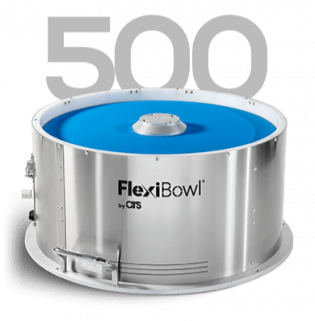
FLEXIBOWL® is an innovative device used for bulk parts feeding. All components within the range of 1–250 mm and 1–250 g can be handled by a single FLEXIBOWL® tray, replacing an entire set of vibratory feeders.
The system is compatible with any robot and vision system.
FLEXIBOWL® feeds entire families of parts and requires zero changeover costs when switching products. The absence of dedicated tooling, combined with easy-to-use and intuitive programming, allows for quick and repeated product changes during the same work shift. Production changeovers are completed in seconds without the need for lengthy mechanical adjustments.
Comparative studies have proven that FLEXIBOWL® is capable of feeding parts in a more uniform, continuous, and efficient manner than other solutions. Parts can be fed in a continuous motion, i.e., in circular tracking mode.
FLEXIBOWL® operates efficiently and reliably, even for parts with burrs or dimensional variations.

HOW DOES IT WORK?


Traditional operational program
The administration process consists of 3 main steps:
-
A – Dropping – Items are delivered to the FlexiBowl surface via a vibratory or belt feeder.
-
B – Separating – The specially designed feeder surface sets the elements in motion, enabling their separation and proper arrangement.
-
C – Picking – A robot with a vision system identifies and precisely picks up items, passing them on to the next process.
By separating and encapsulating each phase of the process in a dedicated sector, the drop, separation, and download processes occur simultaneously. This typically takes 0.5 seconds.

Flexitrack
The administration process consists of 4 main steps:
-
A - Dropping - Items are dropped onto the FlexiBowl rotating surface from a vibratory or belt feeder.
-
B - Separating elements (Separating) - Continuous rotation and the flip mechanism enable even distribution and separation of parts on the surface.
-
C - Non-Stop Position Detection (Detecting) - The vision system analyzes the arrangement of parts on the surface and identifies their orientation. The camera transmits the data to the robot, which calculates the best gripper trajectory.
-
D - Picking - After receiving data from the camera, the robot calculates the trajectory of the detail based on the encoder.
Thanks to the Flexitrack system, items do not stop for picking, which significantly speeds up the process.

Multiple part feeding
The administration process consists of 3 main steps:
-
A – Dropping – Items are delivered to the FlexiBowl surface via a vibratory or belt feeder.
-
B – Separating – The specially designed feeder surface sets the elements in motion, enabling their separation and proper arrangement.
-
C – Picking – A robot with a vision system identifies and precisely picks up items, passing them on to the next process.
Supports up to four part types simultaneously. Minimizes layout and production costs in processes that use multiple parts simultaneously.
WHAT PARTS CAN BE FED?
FlexiBowl® is highly versatile and suitable for powering a wide range of parts , regardless of:
-
Shape geometry (cylindrical, complex 3D shape)
-
Type of surface (smooth, sticky, tangled, etc.)
-
Material (soft, rubber and silicone)
-
Weight and dimensions (formed and sheared metal parts)


FLEXIBOWL SIZES

-
Part size: 1<x<10 mm
-
Max load: 1 kg
-
Illumination area: 180x90.5 mm
-
Recommended part weight: <20g
-
Pick-up height: 172 mm
-
Recommended hopper 1.5 L

-
Part size: 1<x<20 mm
-
Max load: 3 kg
-
Illumination area: 111x230 mm
-
Recommended part weight: <40g
-
Pick-up height: 270 mm
-
Recommended hopper 5/10 L
-
Part size: 5<x<50 mm
-
Max load: 7 kg
-
Backlight area: 334x167 mm
-
Recommended part weight: <100g
-
Pick-up height: 270 mm
-
Recommended hopper 10/20 L

-
Part size: 20<x<110 mm
-
Max load: 7 kg
-
Illumination area: 404x250 mm
-
Recommended part weight: <170g
-
Pick-up height: 270 mm
-
Recommended hopper 2040/L

-
Part size: 60<x<250 mm
-
Max load: 7 kg
-
Illumination area: 404x325 mm
-
Recommended part weight: <250g
-
Pick-up height: 270 mm
-
Recommended hopper 20/40 L

-
Part size: 5<x<300 mm
-
Max load: 7 kg
-
Backlight area: 917x525 mm
-
Recommended part weight: <300g
-
Pick-up height: 270 mm
-
Recommended hopper 40/60 L
INTEGRATION WITH VISION SYSTEM AND ROBOT
The FLEXIBOWL feeder is compatible with any robot and vision system.
Thanks to dedicated plug-ins and support for TCP/IP, UDP/IP, Ethernet/IP and I/O communication, FLEXIBOWL is seamless to integrate.
Applications with FLEXIBOWL have already been successfully implemented with well-known robot brands, including: FANUC, UR, EPSON, ABB, OMRON ADEPT, KUKA, DENSO, STAUBLI, MECADEMIC, KAWASAKI, DOOSAN, MITSUBISHI, OMRON, SIEMENS, ALLEN-BRADLEY.
Ready-made plug-ins

ABB

Denso

Doosan

Epson

Fanuc
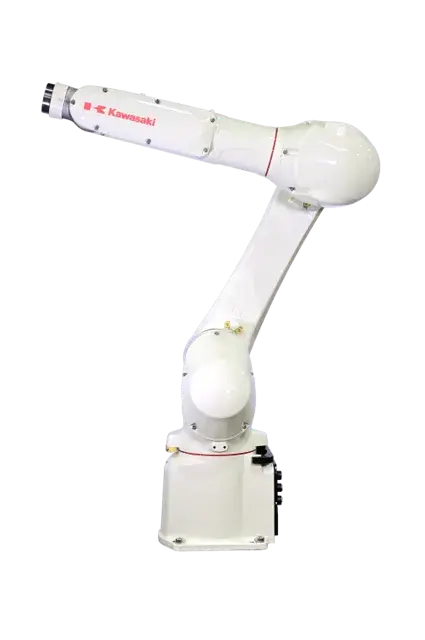
Kawasaki

Kuka
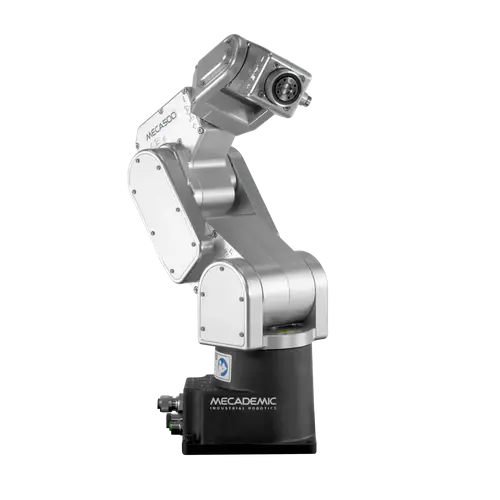
Mecademic

Mitsubishi Electric

Omron
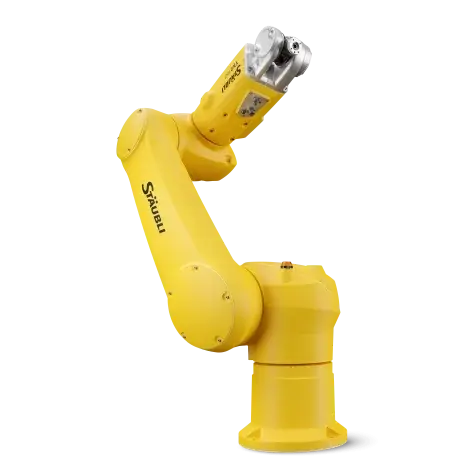
Stäubli

Techman Robot

Universal Robots
FREE EFFECTIVENESS TESTS
Over the past few years, we've implemented FLEXIBOWL in dozens of production processes where efficient and trouble-free parts feeding is key. For each of them, this innovative solution was new and challenging. That's why we launched free FLEXIBOW efficiency tests, because good solutions speak for themselves.
WHAT DOES THE PARTS TESTING PROCESS LOOK LIKE?

1. Delivering parts for testing. First, please contact our Process Engineer, who will send you a form with basic information about the components and expected results, and advise you on the best method for shipping the parts for testing.
2. Online meeting to discuss the possibilities of implementing the solution in your company. We know that time is precious. Therefore, to save both you and our employees time, we practice short online meetings during which we discuss your needs. Our Process Engineer and FLEXIBOWL Application Specialist will participate in this meeting. We will discuss your goals and expected process efficiency and answer any questions you may have at this stage.
3. Component testing. Once we have the necessary information to run the tests, we begin testing, which, depending on the complexity of the component, takes 1-3 weeks.
4. Evaluation. After completing the tests, we prepare an evaluation for you, which includes: feed system specifications, a video of the feed operation on the selected robot, a detailed quote, and confirmation of the guaranteed project completion time.
5. Decision. This is the point where we await your feedback and decisions.
